-33%


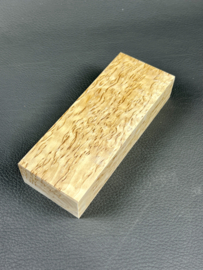
Spalted Beech -Straight grain-
Beautiful, distinctive piece of spalted beech. This wood is perfect for crafting a custom handle to your own design. One block contains enough material for two traditional Japanese handles.
Spalted beech differs greatly from conventional beechwood due to its exceptionally pronounced grain, caused by slow growth and genetic variations. It features striking brown to black-and-white markings. Beech is ideal for woodturning and polishes extremely well. Density: 650 kg/m³.
This wood captures the heart of every woodworker with its silky-smooth appearance.
- Sample photos shown — the actual pieces may vary.
- Small inclusions, cavities, defects, holes, and a few minor drying cracks may occur, which are typical for root wood.
- Natural wood: not stabilized, not dyed.
- The wood types offered here are well dried and free from sapwood and woodworm.
- For the photos, the wood has been sanded. The wood you receive will have a rough-sawn appearance.
Minimum size: 130 × 40 × 35 mm
What is spalting?
Spalting is a natural discoloration of wood caused by fungi. It occurs mainly in dead trees, but living trees under stress can also develop spalting. While the process can lead to slight weight and strength loss, the unusual colors and patterns make spalted wood highly sought after by woodworkers and collectors.
Types of spalting
Spalting is generally divided into three main types. A single piece of wood may display one or more of these:
Pigmentation – colored stains in the wood (e.g., blue, green, red, or dark brown).
White rot – pale, “washed-out” areas where the wood can become softer locally.
Zone lines – dark, often irregular lines that emphasize natural boundaries in the wood.
Spalting can occur in both hardwoods and softwoods, but zone lines and white rot are more common in hardwoods. In softwoods, brown rot occurs more frequently; a well-known exception is the beefsteak fungus (Fistulina hepatica), which can create spalting-like effects in hardwoods.
Pigmentation (color formation)
Pigmentation occurs when fungi produce pigments and deposit them in the wood. A well-known example is bluestain: the color becomes visible when enough fungal hyphae are concentrated in a specific area.
Pigment-producing fungi can affect the wood, but often at a slower rate than white-rot fungi. The most common groups are ascomycetes and so-called imperfect fungi. Some fungi, such as Trichoderma species, are generally not considered spalting fungi because they do not colonize the wood internally and do not produce the enzymes required to break down the wood cell wall components.