
-40%
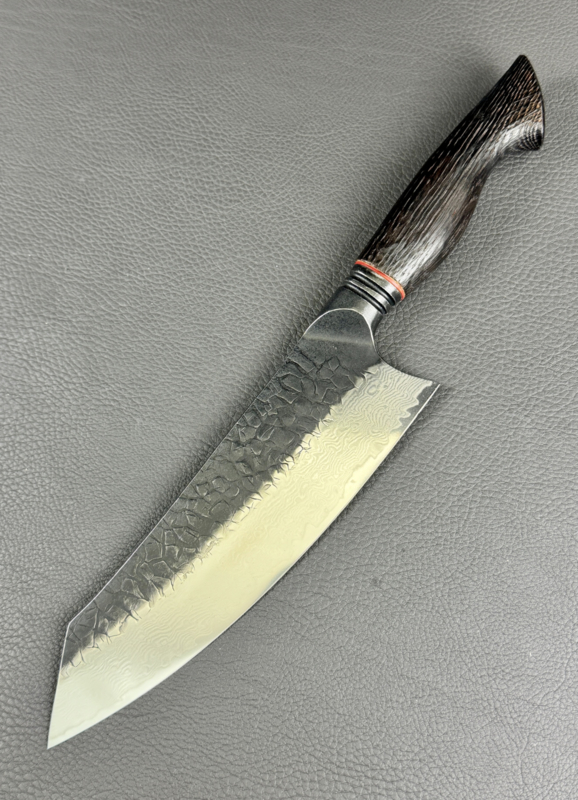
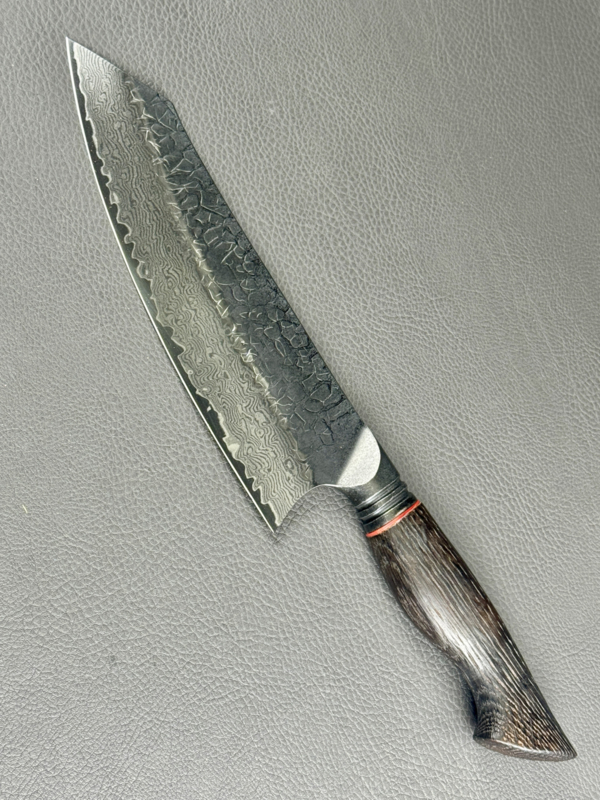
Katsumoto 太古の刀 Taikō no Tō Kuro, Kiritsuke santoku 190 mm (universal knife)
SKU: Black-001Katsumoto 太古の刀 Taikō no Tō Kuro — A knife as a meeting point of civilizations
Over the course of four centuries, Japan, China, and the Netherlands became uniquely connected through maritime trade networks that exchanged not only goods but also knowledge, techniques, and value systems. What began in the early 17th century with the establishment of the Dutch VOC trading post on Deshima (also known as Dejima) — the artificial island in Nagasaki Bay — grew into an exceptional bridge between East and West. At a time when Japan was largely isolating itself from foreign influences, it was the Dutch who were the only ones to retain access to the Empire of the Rising Sun. Through them, the Chinese world also reached European shores — via intermediaries, objects, and ideas. One of the most important VOC trading posts on the Chinese coast was Canton (Guangzhou): a trading post from 1749 to 1803, with tea and porcelain as important products. The Katsumoto Taikō no Tō knives are crafted in Yangjiang, China, just a few hours away from the ancient trading centers of Canton in China.
Trade between these three worlds was never merely economic. It involved a profound interplay of artisanal traditions, aesthetics, and cultural views. Chinese porcelain and lacquerware, Japanese steelwork and woodworking, Dutch knowledge of shipbuilding, cartography, and medical science: all these elements circled between the coasts of Asia and Europe. In the slipstream of merchandise flowed something more invisible yet fundamental: mutual respect for precision, durability, and craftsmanship.
It is in this spirit that the Taikō no Tō knife was born.
A knife that stands for more than function; it embodies centuries of intercultural interaction. The blade is forged from Damascus steel, layered using a technique that harks back to the samurai forging of pre-modern Japan, which itself dates back to the Yayoi period (c. 300 BC – 300 AD) and especially to the subsequent Kofun period (c. 250–538 AD), when forging techniques from China and Korea were introduced to Japan — with each layer a reminder of time, strength, and refinement. The handle is crafted from oak, sourced from sustainably managed forests, and shaped using techniques rooted in 17th-century Dutch shipbuilding. The whole is balanced and subtle, firm in the hand, and elegant in movement.
The Chinese influence is also visible — or rather: palpable. The shape and balance are tailored to the demands of classic Chinese cuisine, where speed, precision, and respect for ingredients take center stage. The Katsumoto Taikō no Tō cuts with the confidence of an heirloom, yet moves with the fluidity of a timeless tool.
Katsumoto 太古の刀 —Literally "the Old Sword"
A silent bearer of history. An instrument that, without words, speaks of dedication, innovation, and exchange. In an era of rapid consumption and digital distraction, this knife calls for slowing down, for attention. It is an ode to craftsmanship, and a reminder of how civilizations grow when they dare to meet one another.
For the Katsumoto series, we try to combine the best of multiple worlds: the knowledge and experience of forging from Japan and the knowledge of woodworking and large-scale production from China. This has once again resulted in a wonderful collaboration between Chinese designer Steve Cheng and the owner of Japansemessen.nl.
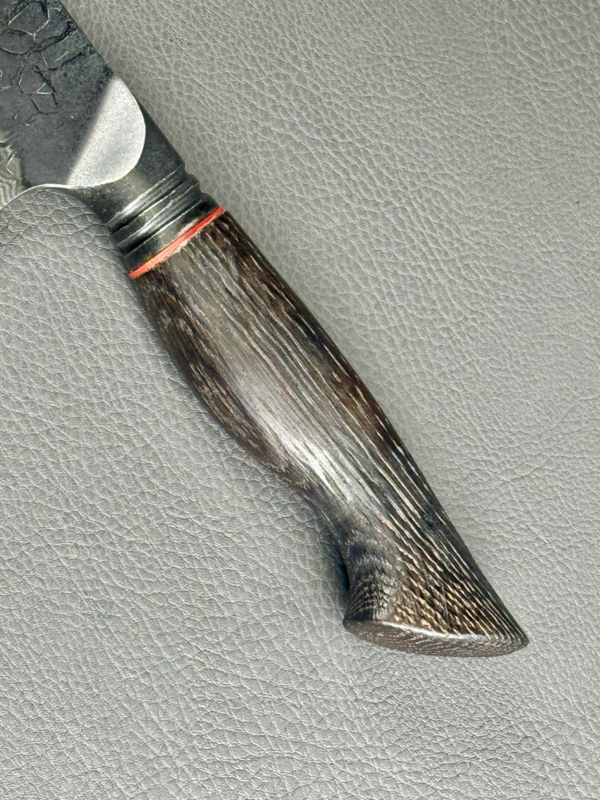
The amazing new "Taikō no Tō" series, which literally means "The Knife from the Prehistoric Era," is an ode to traditional medieval knives as they were widely used in Europe. The oak handle is a reflection of the "primitive" wood from which many houses and VOC ships were built, and the black forged pommel and the shape of the handle resemble a traditional dagger, such as those commonly found in North/Eastern Europe in the 17th and 18th centuries.
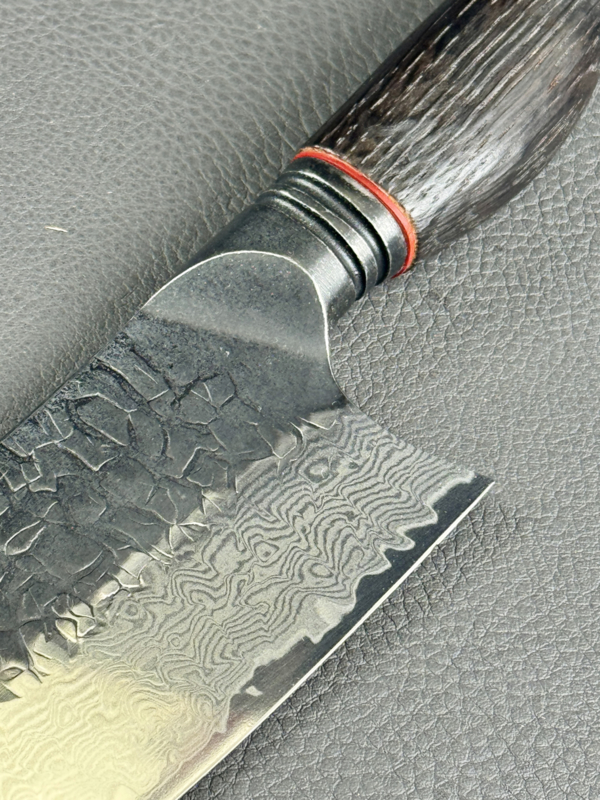
The double-edged and beautifully laminated stainless steel Damuscus blade features a core of 10Cr15CoMoV steel. This steel is often considered a close equivalent to VG10 steel and offers comparable performance in terms of hardness, edge retention, and corrosion resistance. Both are stainless steels known for their good balance of these properties, making them popular choices for high-quality kitchen knives and other cutting tools. While VG10 is of Japanese origin, 10Cr15CoMoV is produced in China and can be a more affordable alternative without loss of quality, provided it is processed properly.
The stainless core steel is forged between two layers of softer steel; this outer layer is polished for a smooth satin look and feel. It also ensures that the core steel is well protected against potential damage and oxidation.
- Blade length: 190 mm
- Total length: 320 mm
- Weight: 200-210 grams
- Blade thickness: 2.2 mm
- Steel type: core steel: 10Cr15CoMoV steel (comparable to VG10) (stainless) with 2 layers of Damascus steel (Warikomi forged) and a fine hammered pattern and kuroishi (black) protective coating
- Hardness: 59-61 (Rockwell C)
- Handle: Ergonomically shaped burnt oak handle with red G10 spacer (linen micarta)
- The steel bolster is forged onto the blade for excellent balance. The knives are delivered in traditional wooden boxes made of Paulownia wood (Paulownia Tomentosa).
- These knives are not dishwasher safe and are very sensitive to hard and/or frozen products.
These knives can be customized to your liking: if you would like to have your name engraved on the knife, you can create a unique gift for yourself or a friend. We can engrave logos, images, or names on both the blade and the included wooden gift packaging.
We can also offer a professional "hand lettering" service if you would like to have your name or the recipient's name written in a professional manner!
These knives are a unique design by Steven Chen for Japanesemessen.nl. To save costs, we decided to have the knives produced in China. We are pleased to offer these extremely high-quality knives at a reasonable price.